
.jpg)
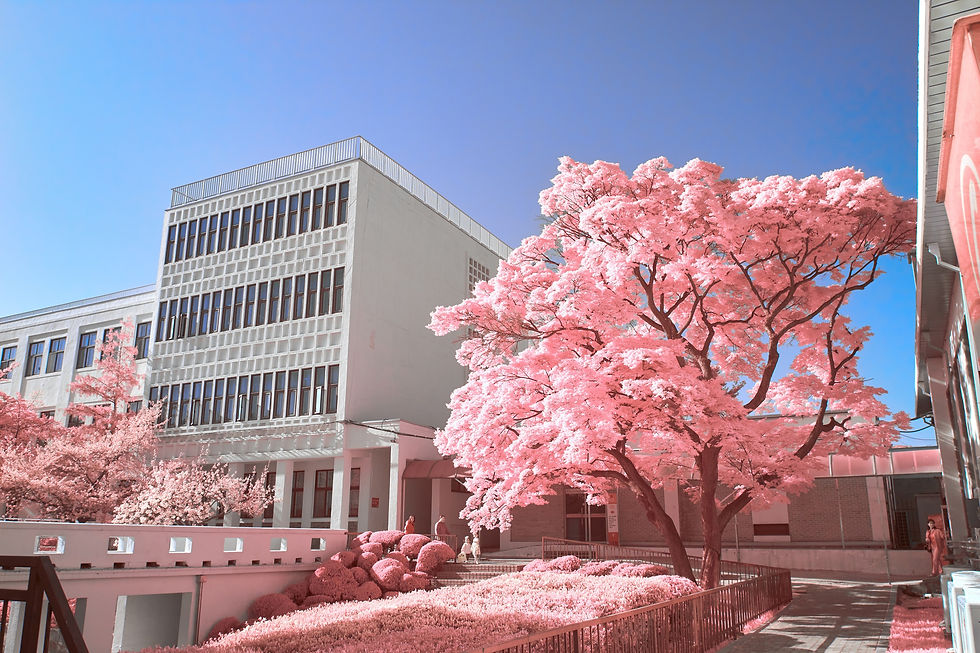
Took these with my phone
- Petr Svitil
- Oct 6, 2021
- 3 min read

For the first time in history, photography as a hobby opened to virtually everyone with the emergence of compact consumer cameras in the early 2000s. I remember when my dad bought our first digital compact: it was some Canon that looked like a bar of soap with 3MP in it. But it was a miracle! You could take as many images as you wanted, or that would fit onto the 256MB CF card…
We then entered the era of 2010s, where every respectable camera had 18MP or more and the pros always made had pixels than the hobbyists. The idea of having a 50MP camera was a wild dream in 2010 after all, and it wouldn’t be until 2015 that Canon would release the first 50MP full-frame cameras; the 50MP 5Ds and 5Dsr. If you had one of these cameras then you were a revered professional.




So where does that leave phone photography in the 2020s? We kept chasing more pixels and now we have them. The Samsung Galaxy S20 Ultra has a wide angle camera with 108MP, and a tele one with 48MP. If that wasn’t enough, the newly announced ISOCELL HP1 sensor has 200MP!

I understand that is a big oversimplification and we’re not taking into consideration variables such as fast glass or sensor size, but had you pulled one of these phones out 10 years ago they would have resurrected the witch burning laws. Ten years ago the cameras on phones were abysmal to say the least and genuinely held you back, but that is no longer that case. They have enough pixels, good enough dynamic range, and use AI to enhance the image to make up for the limitations of the small sensor and lens.
When you share an image with a note that it was shot on your phone, I think to myself that you lack confidence that the image is good enough to be shared. And don’t get me wrong, not all images need to be great and printable, it’s okay for some images to just be snapshots, but then show those images for what they are. Many of my favorite images are snapshots that wouldn’t be suitable for a large print, but hold either sentimental value, have a cool story behind them, or just capture an atmosphere I want to re-live later.
That being said, unless you decide to print big, phones can even handle smaller prints very well. Only having a phone as a camera is no longer an excuse to create poor images (yes, I realize if you shoot architecture and require a tilt-shift lens for example, then this does not apply to you). The average non-photographer that takes a “bad” image on his phone today would also take such an image on a point-and-shoot 10 years ago, and with pro gear today.
Some research says that people take almost two billion photos a day. If your image is not in the top 80th percentile or higher, then I don’t want to see it. I’ve no interest in seeing yet another mediocre image that brings nothing new or of value to the table. And again, we’re not determining how good an image is based on the pixel count, dynamic range, and how much bokeh there is; we care about what’s in the image. The same as when you receive a letter from a loved one, while the paper and handwriting are nice, it’s the meaning behind those words that give true value to the letter; not how expensive the paper and pen used were.
When you look at history’s greatest images you’re bound to come across photographers such as Henri Cartier-Bresson, Kevin Carter, Lewis Hine, or Kenneth H. Lehr. All of them had equipment that was more cumbersome and took longer to set up compared to what we carry with us everyday. If they could create images that live on beyond their lifetime, why couldn’t you?
(P.S. the image next to the photo of my 5Ds was actually taken on a Samsung J5..)


Comments